
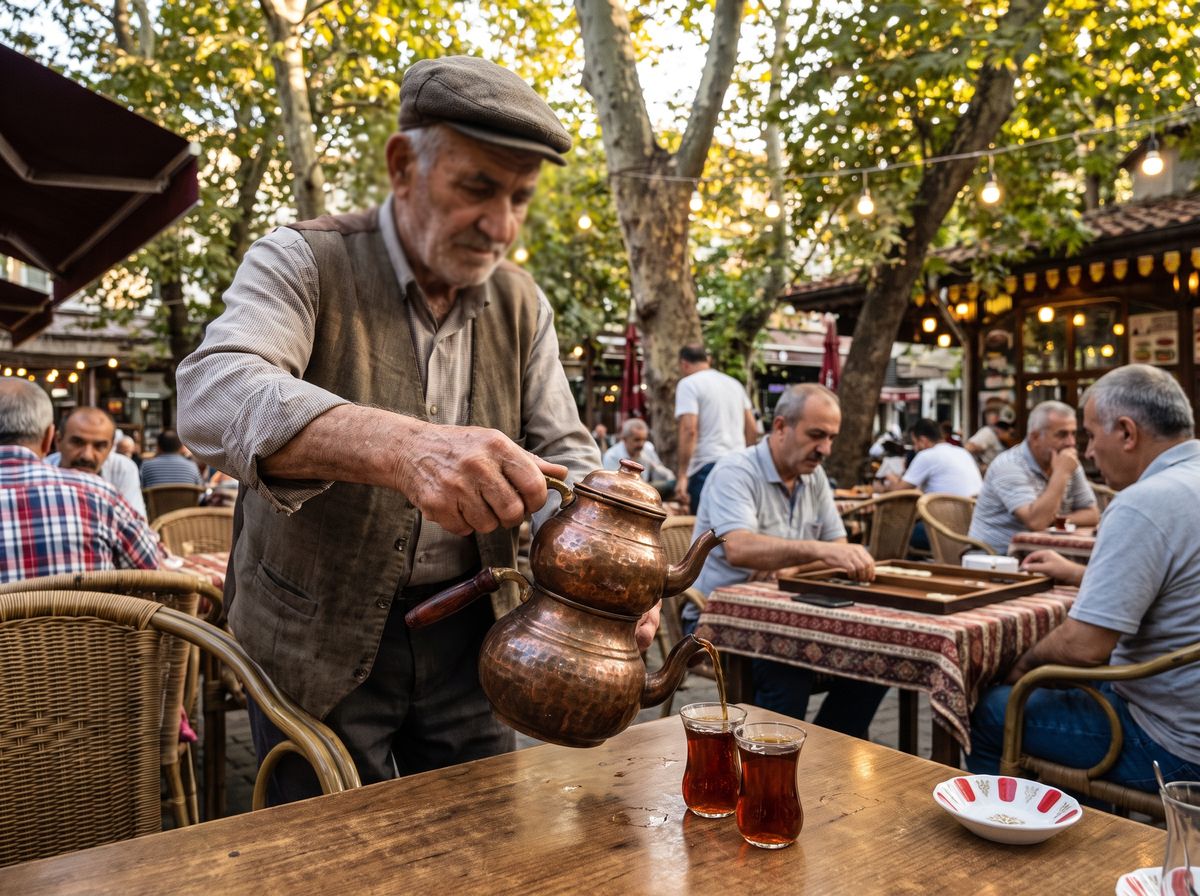
Why Is Tea Everywhere in Türkiye?
In Türkiye, tea is not a beverage choice; it is the default language of welcome. Turks drink more tea per person than any other nation, around 3 kilograms each per year, and nearly every glass is served in the same slim tulip shape. When a shopkeeper, barber, or new acquaintance offers you çay (Turkish black tea), they are offering friendship, not a sales pitch.
Refusing outright can feel abrupt, accepting takes five minutes, and either way you owe nothing. Understanding that single fact will transform how you experience the bazaars of Istanbul and the workshops of Cappadocia.
Tulip Glasses, Tea Gardens, and the Double Teapot
The classic glass is called ince belli, literally "slim waisted," and its curves are practical: the wide rim cools the top sip while the narrow waist keeps the base hot. Tea comes from a çaydanlık, a two tier teapot; a strong concentrate brews on top for 15 minutes or so, then gets diluted with hot water to your taste. Ask for it koyu (dark) or açık (light).
Nearly all of Türkiye's tea grows along the eastern Black Sea coast around Rize, and locals praise a perfect glass as tavşan kanı, "rabbit's blood," for its deep amber red color.
A çay bahçesi (tea garden) is an open air institution, often family friendly and alcohol free. As of 2026 a glass costs roughly EUR 0.30 to 1 in neighborhood gardens, a bit more at scenic terraces along the Bosphorus.
A Day Measured in Glasses
From simit (sesame bread ring) breakfasts to midnight backgammon, tea marks the hours. Watch for delivery boys carrying swinging trays of full glasses to shopkeepers who ordered by pressing a buzzer or calling down the street.
In tea gardens from Istanbul's Kadıköy to Antalya's Kaleiçi (old town), a single glass buys you an hour of shade and people watching. Most gardens open from around 8 am until midnight, though schedules vary by season; verify locally.
Is It Rude to Refuse Tea in a Shop?
No, but do it warmly. Tea offered in a carpet shop, ceramic studio, or hotel lobby is hospitality first; accepting creates no obligation to buy anything, and merchants know this better than anyone.
To decline politely, place your right hand over your heart and say teşekkürler (thank you). If you accept, stay for the glass; walking away mid tea is the one real faux pas.
Sugar cubes sit beside the glass, never milk. When you have had enough, rest your spoon flat across the rim of the glass; it is the traditional signal that spares you an endless refill.
What Makes Turkish Coffee a UNESCO Treasure?
Türk kahvesi (Turkish coffee) joined the UNESCO Intangible Cultural Heritage list in 2013, honored for both its brewing craft and its social role; Turkish tea culture followed in 2022. The beans are ground to a fine powder, simmered slowly and unfiltered in a small long handled pot called a cezve, and poured with the foam intact.
It arrives in a small cup with a glass of water and often a piece of lokum (Turkish delight). Sip the water first to clear your palate, then take your time; a Turkish proverb holds that a single cup of coffee is remembered for 40 years.
Expect to pay about EUR 1.50 to 3 in most cafes as of 2026. Historic roasters near Istanbul's Grand Bazaar have been at it since the 19th century; verify current hours, as many counters close by early evening.
Ordering Like a Local: Sade, Orta, Şekerli
Decide on sugar before you order, because it is brewed into the coffee, not stirred in afterward. Say sade for no sugar, az şekerli for a little, orta for medium (the most popular choice), or şekerli for sweet.
The brewing itself takes several unhurried minutes over low heat, sometimes on a bed of hot sand. One firm rule: stop sipping when you feel texture. The thick grounds at the bottom are not for drinking.
Fortune in the Cup and Salep in Winter
Finish your coffee, flip the cup upside down onto the saucer, and let it cool for a few minutes: that is the setup for kahve falı (coffee fortune reading). A friend reads the shapes the grounds leave behind, spinning tales of journeys, letters, and luck. Treat it as playful conversation, not prophecy.
From roughly November through March, look for salep, a hot, thick milk drink made from ground wild orchid root and dusted with cinnamon. Street carts and cafes sell it for about EUR 1.50 to 3, and it pairs beautifully with a cold ferry crossing.
For where these drinks fit into each stop on the 15 day route, see the free Culture section of the main turkey15days.com guide.