
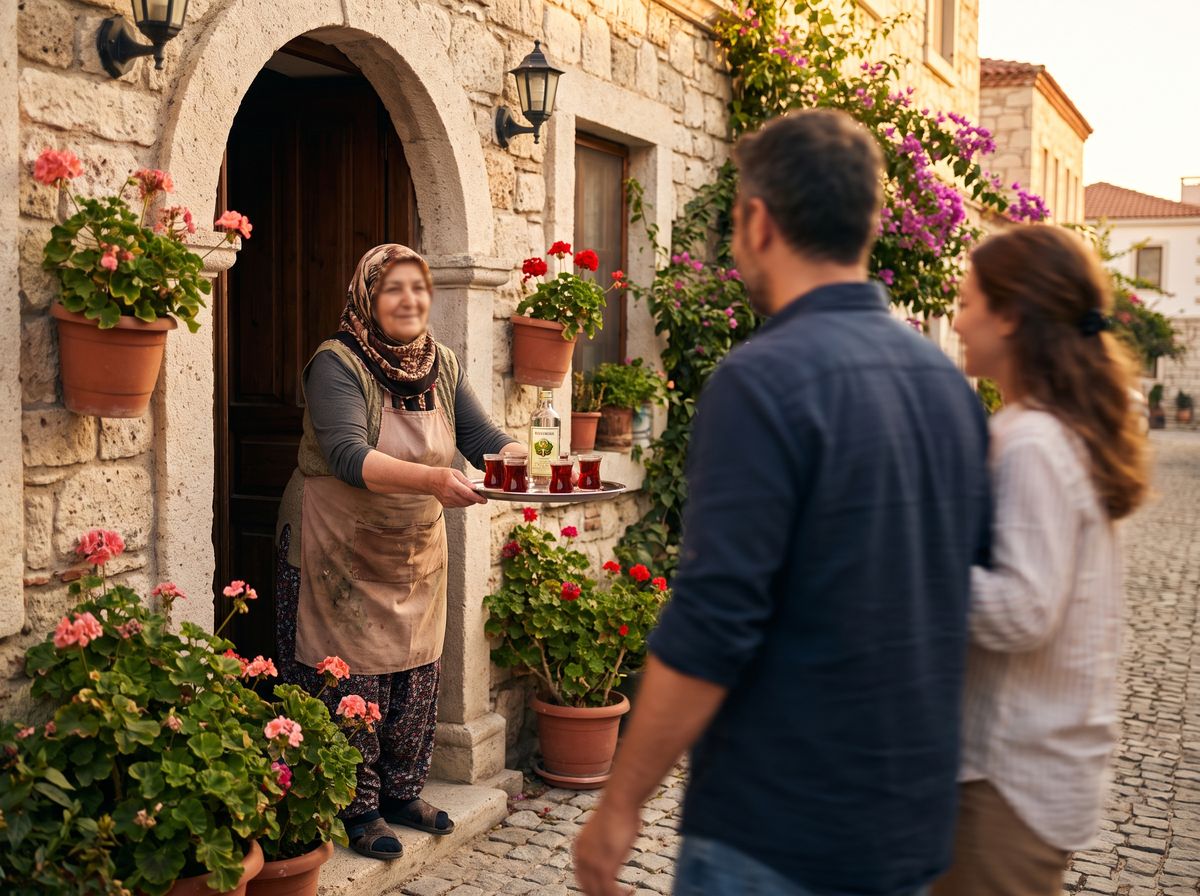
Misafirperverlik: The Turkish Art of Welcoming Strangers
Misafirperverlik is the Turkish tradition of hospitality, built on the belief that a guest is a Tanrı misafiri, a guest sent by God. In practice, it means free çay (tea) appears wherever you pause, hosts sprinkle kolonya (lemon cologne) into your hands at the door, and strangers walk you to your destination instead of just pointing. You accept with a smile, a Merhaba (hello), and a Teşekkür ederim (thank you), and no payment is ever expected.
On a 15-day route through Istanbul, Ephesus, Cappadocia, and Antalya, you will meet this generosity daily. Knowing how it works, and how to respond, turns awkward moments into the best memories of the trip.
Why Do Turks Treat Guests as Gifts from God?
The idea is older than the republic itself. Nomadic Turkic custom, Anatolian village life, and Islamic teaching all honor the traveler, and the phrase Tanrı misafiri still describes an unexpected guest who must be fed and sheltered without question.
The tradition was even built in stone. In the 1200s, Seljuk sultans placed caravanserais roughly every 30 to 40 kilometers along Anatolian trade routes, about one day's camel journey apart, and travelers could stay up to three days with food and lodging free.
That heritage explains why Turks help strangers so readily today. Hosting well is a matter of family honor, and guiding a lost visitor reflects on the whole neighborhood.
Tea Everywhere: Turkey's Currency of Welcome
Türkiye drinks more tea per person than any other country, over 3 kilograms per person per year, brewed from leaves grown around Rize on the Black Sea coast. It is served in small tulip-shaped glasses from a stacked double teapot called a çaydanlık, ideally brewed to the deep red Turks call tavşan kanı (rabbit's blood).
Expect a glass offered in carpet shops, barber chairs, bus stations, and offices, always free. In a neighborhood çay bahçesi (tea garden), a glass costs roughly EUR 0.50 to 1 as of 2026, closer to EUR 2 in the tourist zones of Istanbul.
Accepting at least one glass is the polite default; it signals friendship, not an obligation to buy anything. Take the sugar cubes on the side, hold the glass by the rim, and settle in for conversation.
What Is Kolonya and What Do I Do With It?
Kolonya is a lemon-scented cologne, around 80 percent alcohol, that hosts sprinkle into guests' cupped hands on arrival. The custom spread in the late Ottoman era in the 1800s and never left; you will meet it in homes, at barbershops, after restaurant meals, and on intercity buses.
The move is simple: cup both hands, rub them together, then dab your palms on your cheeks or neck. It is refreshing, mildly antiseptic, and a sign that you are now under the host's care. A 400 ml bottle costs about EUR 2 to 4 in any supermarket as of 2026 and makes an excellent souvenir.
An Invitation to the Family Table
Invitations come fast in Türkiye, sometimes within an hour of meeting someone. Accept if you can; refusing outright can disappoint, though a warm excuse and sincere thanks are always acceptable.
Remove your shoes at the door, accept the slippers offered, and bring a small gift, such as a box of baklava or chocolates for around EUR 5 to 10. At the table, expect repeated refills; hosts insist two or three times, so a firm, smiling refusal takes patience.
Finish with Elinize sağlık (health to your hands), the classic compliment to the cook. To recognize the dishes before you sit down, browse the free Street Food gallery on turkey15days.com.
Bayram: Hospitality at Full Volume
Twice a year, misafirperverlik becomes a national event. Ramazan Bayramı, also called Şeker Bayramı (Sugar Feast), closes the Ramadan fast with three official holiday days; Kurban Bayramı (Feast of the Sacrifice) follows with four. In 2026 they fall in late March and late May respectively, but dates follow the lunar calendar, so verify before you travel.
Doors open to everyone during bayram. Children kiss elders' hands and press them to their foreheads in exchange for candy and small bills, trays of lokum (Turkish delight) and chocolate circulate, and during Kurban Bayramı families traditionally share meat with neighbors and those in need.
For travelers, bayram means joyful streets but packed transport. Book buses and flights weeks ahead, and note that museums may open late on the first morning; verify current hours.
How Do You Accept and Reciprocate Politely?
Accept gracefully first; that is the real gift to your host. Say Merhaba (hello) on arrival and Teşekkür ederim (thank you) often; even two words of Turkish visibly delight people.
Never offer money for a gesture of hospitality, because it can genuinely offend. Reciprocate instead with small gifts from home, photos you promise and actually send, sincere compliments, or a purchase you truly want from a host's shop.
To decline anything politely, place your right hand flat on your chest, smile, and say Teşekkür ederim. The hand on the heart says everything: I am grateful, I am full, and I know exactly how generous you have been.