
What Happens in a Turkish Hamam?
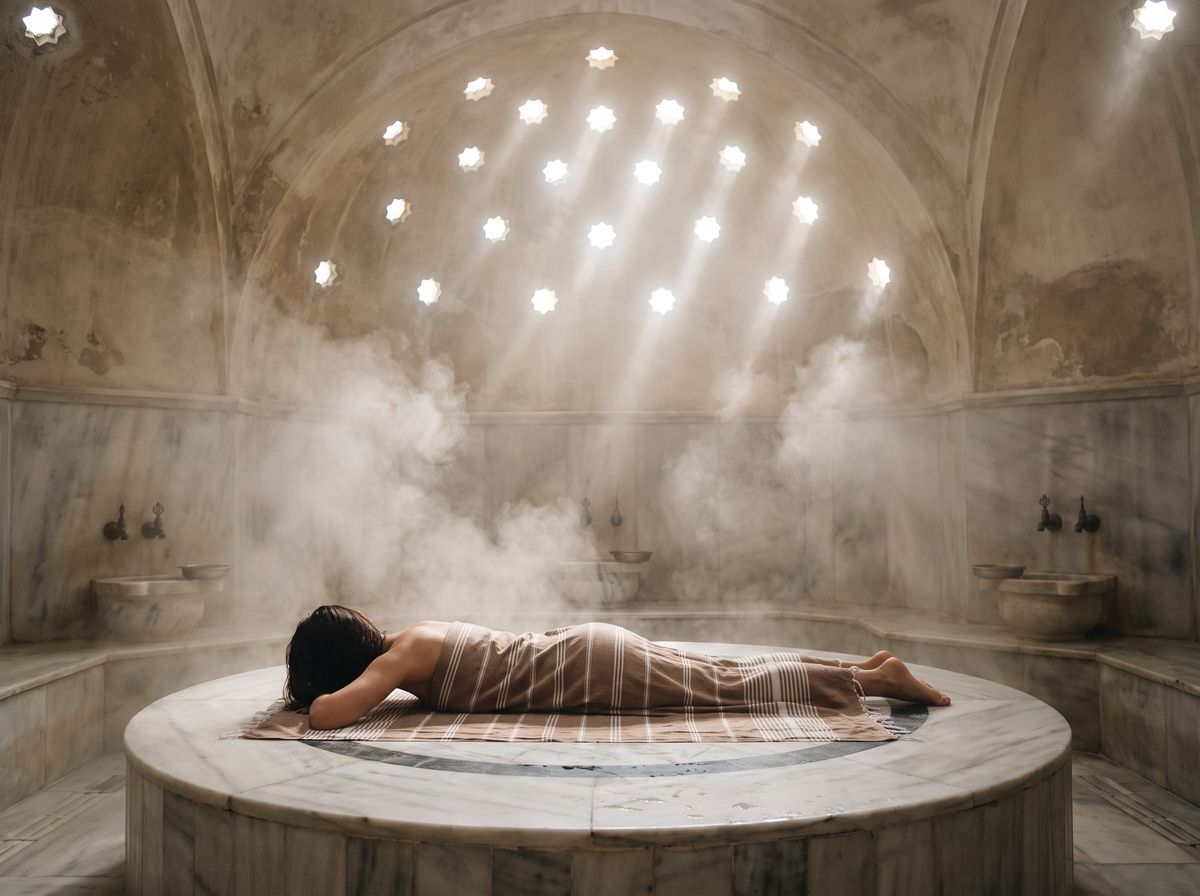
A Turkish hamam is a traditional public bathhouse where you sweat on a heated marble platform called the göbek taşı (belly stone), receive a full-body exfoliation with a kese (coarse scrubbing mitt), and finish with a foam massage and rinse. A standard session lasts 60 to 90 minutes and costs roughly 40 to 80 EUR at Istanbul's historic bathhouses as of 2026. Men and women bathe in separate sections or at separate hours, and everyone wears a peştemal (thin checkered cotton wrap).
The ritual grew out of Roman and Byzantine bathing culture and was refined by the Ottomans into a beloved social institution. Knowing the sequence in advance lets you actually relax instead of wondering what comes next.
The Hamam Ritual, Step by Step
You begin in the camekan (wooden changing hall), where you undress and wrap yourself in your peştemal. An attendant then leads you into the hararet (hot marble steam room) and gestures toward the göbek taşı. Lie on the heated marble for 15 to 20 minutes until you are thoroughly warm and your pores have opened.
Next comes the kese. Your attendant scrubs you head to toe, and yes, you will watch gray rolls of dead skin lift away; consider it a badge of honor. Then a cloud of olive oil soap foam is billowed over you from a cloth sack, followed by a firm soapy massage and buckets of warm water for rinsing.
The active treatment takes 45 to 60 minutes in total. Afterward you are bundled into dry towels and guided back to a lounge to cool down slowly.
Do Men and Women Bathe Separately?
Yes, in nearly all traditional hamams. The larger historic bathhouses were built with two mirrored wings, one for men and one for women, each with its own entrance and attendants of the same gender.
Smaller hamams with a single bathing hall assign separate hours instead, commonly mornings for women and afternoons and evenings for men, or the reverse. Schedules shift seasonally, so verify current hours before you go. A few modern spa-style hamams offer mixed sessions for couples, always with swimwear.
Which Istanbul Hamams Date to the 16th Century?
Istanbul's golden age of hamam building came under the Ottoman imperial architect Mimar Sinan. Ayasofya Hürrem Sultan Hamamı, completed in 1556 between Hagia Sophia and the Blue Mosque, and Çemberlitaş Hamamı, built in 1584 on the old Divanyolu road, are both his work and both still in operation.
Kılıç Ali Paşa Hamamı in Karaköy, finished around 1580, and Süleymaniye Hamamı from 1557 complete the historic circuit. All sit within walking distance of the main Sultanahmet sights; for how to slot a hamam afternoon into your first days in the city, see the free Istanbul itinerary section on turkey15days.com.
What to Bring and What to Leave at the Hotel
Almost nothing. Hamams provide the peştemal, towels, and usually disposable underwear, and the kese mitt and soap are included in scrub packages. Bring a swimsuit bottom if you prefer more coverage, flip-flops if you are particular (sandals are supplied), and a hair tie for long hair.
Pack a comb, fresh underwear for afterward, and moisturizer, since the kese leaves skin glowing but thirsty. Leave jewelry and valuables at your hotel; lockers exist but are basic. Skip contact lenses if steam bothers your eyes, and keep your phone out of the bathing hall.
Prices, Tipping, and Booking
As of 2026, expect 40 to 80 EUR for a classic package of bath, kese scrub, and foam massage at Istanbul's historic hamams, with oil massages and other add-ons pushing totals past 100 EUR. Neighborhood hamams outside the tourist core charge noticeably less.
Tipping 10 to 15 percent of the service price directly to your attendant is customary and appreciated; small Turkish lira notes are easiest. Most famous hamams take online reservations, and booking a day ahead is wise in high season from June through September. Typical opening hours run roughly 8 a.m. to 10 p.m., but verify current hours and the gender schedule for your chosen hamam.
The Sweetest Part: Post-Hamam Çay
Do not rush out. The cooling-down lounge, with its glass of sweet black çay (Turkish tea) or a fruit şerbet (sweetened sherbet drink), is part of the ritual, giving your body time to return to normal temperature.
Drink plenty of water too, because you will have sweated more than you realize. Then step outside with the softest skin you have had since childhood, and plan the rest of your day gently; a hamam afternoon pairs far better with a slow dinner than with a sprint through more sights.