
What Is Kahvaltı, the Turkish Breakfast Ritual?
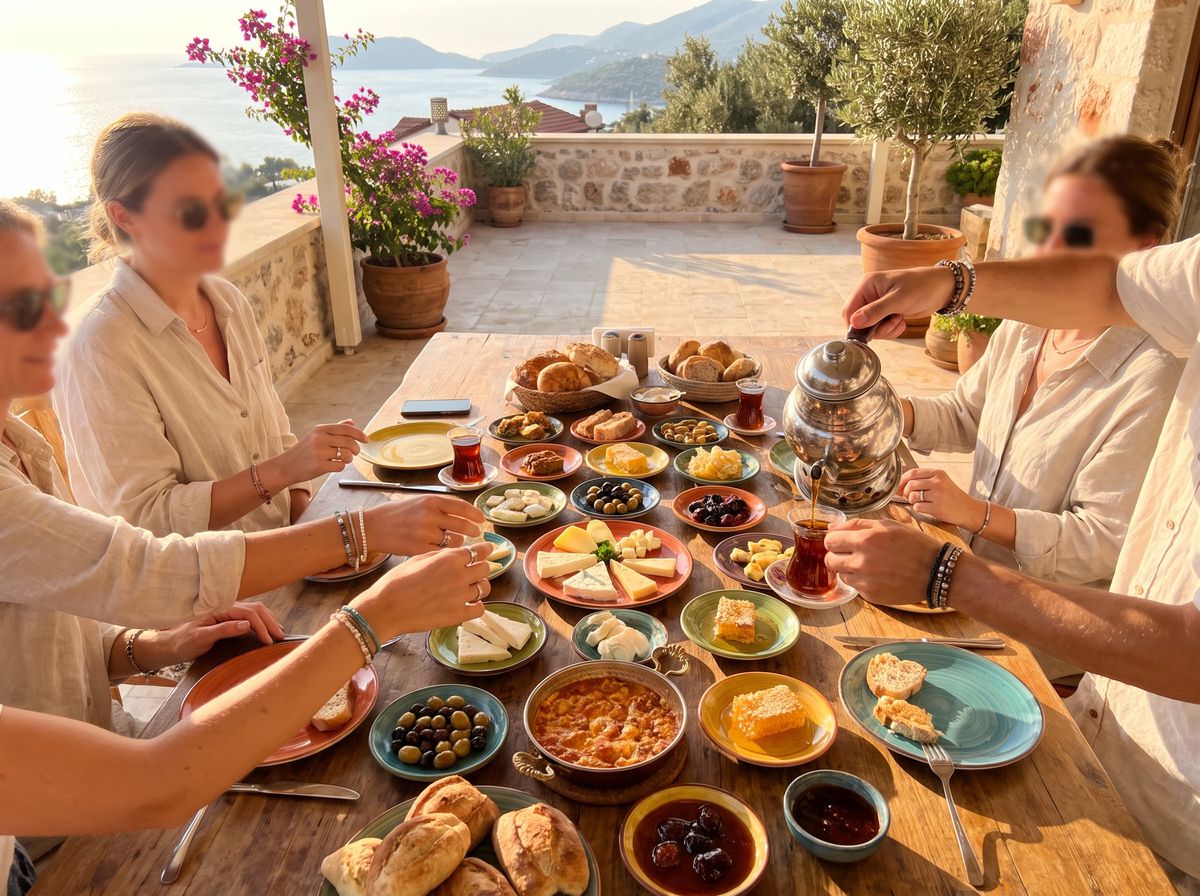
Kahvaltı is the traditional Turkish breakfast, a leisurely shared meal of many small plates: white cheeses, olives, honey with kaymak (clotted cream), menemen (soft scrambled eggs with tomato and pepper), fresh bread, and endless tulip glasses of çay (black tea). The name comes from kahve altı, literally "before coffee," because the meal was meant to line the stomach ahead of the day's first Turkish coffee. On weekends a full serpme kahvaltı (spread breakfast) routinely stretches two to three hours.
For Turks, breakfast is less a meal than a social institution. Families and friends claim a table midmorning, plates keep arriving in waves, and nobody checks a watch; the meal ends when the çay finally stops flowing, not when the food runs out.
What Comes with a Serpme Kahvaltı Spread?
Serpme means "scattered," and that is exactly what happens: 15 to 25 small dishes land across the table within minutes. Expect beyaz peynir (brined white cheese), aged kaşar (a firm yellow cheese), tulum (crumbly cheese ripened in a casing), green and black olives, tomatoes, cucumbers, and several homemade jams.
Hot plates follow: menemen bubbling in a copper pan, sucuk (spiced beef sausage) with fried eggs, and sigara böreği (crisp cheese-filled pastry rolls). The crown is bal kaymak, thick clotted cream flooded with honey; the version made from water buffalo milk around Afyonkarahisar is considered the gold standard.
As of 2026, a serpme runs roughly 10 to 18 EUR per person in Istanbul and slightly less in Izmir, usually with a two-person minimum and unlimited çay included.
Why Does Turkish Breakfast Last for Hours?
Because nothing about it is designed to end. The çay is bottomless, every plate is shareable, and refusing a refill borders on impolite. Weekend kahvaltı is when extended families gather, so tables are commonly held from 10:00 until early afternoon; there is even a word for the mood it creates, keyif, the art of unhurried pleasure.
Tea powers the marathon. Türkiye is the world's top per-capita tea consumer, and nearly all of it grows around Rize on the Black Sea coast, where commercial cultivation took hold in the 1920s. It is served strong in an ince belli, the "slim-waisted" tulip glass, with sugar cubes on the side and never milk.
The Van Kahvaltısı: Türkiye's Breakfast Capital
The eastern city of Van, about a two-hour flight from Istanbul, sits on the shore of Lake Van, Türkiye's largest lake, and treats breakfast as its civic identity. Its famous Kahvaltı Sokağı (Breakfast Street) is lined with salons that open around 6:00 and serve nothing but breakfast all day.
A Van spread stars otlu peynir, a white cheese studded with wild mountain herbs such as sirmo (a wild garlic), alongside murtuğa (a hot skillet of flour, butter, and egg) and kavut (a roasted grain dish). The city's devotion is official: in 2014 Van set a Guinness World Record when 51,793 people sat down to breakfast together.
Kahvaltı in Istanbul: Neighborhoods to Know
Beşiktaş is the classic starting point. A compact lane near the market, known simply as breakfast street, packs a dozen kahvaltıcı (breakfast houses) side by side; arrive before 10:00 on weekends or expect a 30 to 45 minute wait. Most open around 8:00 and serve until midafternoon, but verify current hours before you go.
For Van-style spreads without the flight, several salons run by families from the region operate in Cihangir and around Taksim, while Kadıköy's Moda neighborhood on the Asian side mixes traditional breakfasts with modern bakeries. A street simit, the sesame-crusted bread ring, costs well under 1 EUR as of 2026 and makes a fine rehearsal; see the free Street Food gallery on turkey15days.com for what else to grab between meals.
Kahvaltı in Izmir: Boyoz, Gevrek, and the Kordon
Izmir adds its own accent. Start on the Kordon, the Alsancak waterfront, where breakfast tables face the Aegean, then try boyoz, a flaky Sephardic-heritage pastry found only in Izmir, with a warm gevrek, the city's crackly, molasses-dipped cousin of the simit.
For a village-style breakfast, head about an hour west to the Çeşme peninsula: Alaçatı, roughly 85 km from the city center, is famous for garden courtyards serving farm cheeses and homemade jams. The vineyard town of Urla, about 40 km out, is a quieter alternative beloved by locals.
Practical Tips for Your First Serpme
Come hungry and come with company; most serpme menus require at least two people. Skip any dinner-sized plans afterward, because a proper kahvaltı is genuinely the day's main event.
Order çay, not coffee, at the start; Turkish coffee traditionally arrives after the meal, honoring the name kahvaltı. Vegetarians eat spectacularly well here, since eggs, cheeses, olives, and vegetables dominate the table, and weekdays are calmer and often cheaper than the packed weekend service.