
Which Istanbul Neighborhoods Should You Visit First?
Istanbul rewards travelers who take it neighborhood by neighborhood: Sultanahmet for imperial monuments, Karaköy and Galata for cafe culture, Beşiktaş and Ortaköy for the Bosphorus waterfront, Kadıköy for food on the Asian side, and Balat for its famous colored houses. Public ferries link the shores in about 20 minutes for less than 1 EUR, so you can comfortably combine two or three districts in a single day.
Within a 15-day Türkiye itinerary, give Istanbul three to four full days. Base yourself in one neighborhood, then let the ferries do the rest; every district below sits within about 30 minutes of the others by water or tram.
Sultanahmet: Monuments Measured in Centuries
Sultanahmet is the old imperial core, where 1,500 years of history stand within a ten minute walk. Ayasofya (Hagia Sophia) was completed in 537, the Sultanahmet Camii (Blue Mosque) in 1616, and the underground Yerebatan Sarnıcı (Basilica Cistern) still rests on 336 marble columns from the sixth century.
As of 2026, foreign visitors pay about 25 EUR to enter Hagia Sophia's upper galleries, while the Blue Mosque remains free outside the five daily prayer times. Topkapı Sarayı (Topkapı Palace) closes on Tuesdays; verify current hours before you plan your day.
The neighborhood feels ceremonial by day and surprisingly hushed after the tour groups leave. Stay for the evening call to prayer echoing between the two great domes.
Karaköy and Galata: Coffee, Climbs, and the Tower
Cross the 490 meter Galata Bridge, past rows of anglers, and the mood changes completely. Karaköy's former hardware district now mixes ship chandlers with specialty coffee bars, small galleries, and some of the city's best baklava (layered pistachio pastry) counters.
Climb toward the Galata Kulesi (Galata Tower), built by Genoese colonists in 1348 and rising about 67 meters above the rooftops. The panoramic terrace costs roughly 30 EUR for foreign visitors as of 2026, though the free view from the surrounding lanes at sunset is nearly as good.
This is the neighborhood for slow mornings: order a Türk kahvesi (Turkish coffee), find a stool on a stepped side street, and watch the hills fill up with people.
Beşiktaş and Ortaköy: The Bosphorus at Street Level
Beşiktaş is a working neighborhood with a loud fish market, student cafes, and ferry piers in constant motion. On its edge stands Dolmabahçe Sarayı (Dolmabahçe Palace), the last Ottoman imperial residence, completed in 1856 and closed on Mondays, so verify current hours.
Twenty minutes up the shore, Ortaköy gathers around the waterfront Büyük Mecidiye Camii (Ortaköy Mosque, 1856), framed by the Bosphorus bridge rising directly behind it. Order the local specialty, kumpir (a giant baked potato loaded with toppings), for about 4 to 6 EUR and eat it on the quay; at dusk the floodlit mosque against the bridge is one of the city's classic photographs.
Why Do Food Lovers Cross to Kadıköy?
Because Kadıköy's market streets are Istanbul's most concentrated eating experience. Around Güneşlibahçe Sokak you pass fishmongers, spice stalls, and turşucu (pickle shops) selling dozens of varieties of turşu (vegetables fermented in brine), plus cups of salty turşu suyu (pickle juice) for about 1 EUR.
Graze on midye dolma (mussels stuffed with spiced rice), browse the secondhand bookshops, and finish with a walk down Moda's seaside promenade facing the old city. For a visual preview of what to order, see the free Street Food gallery on turkey15days.com.
Balat: Colored Houses on the Golden Horn
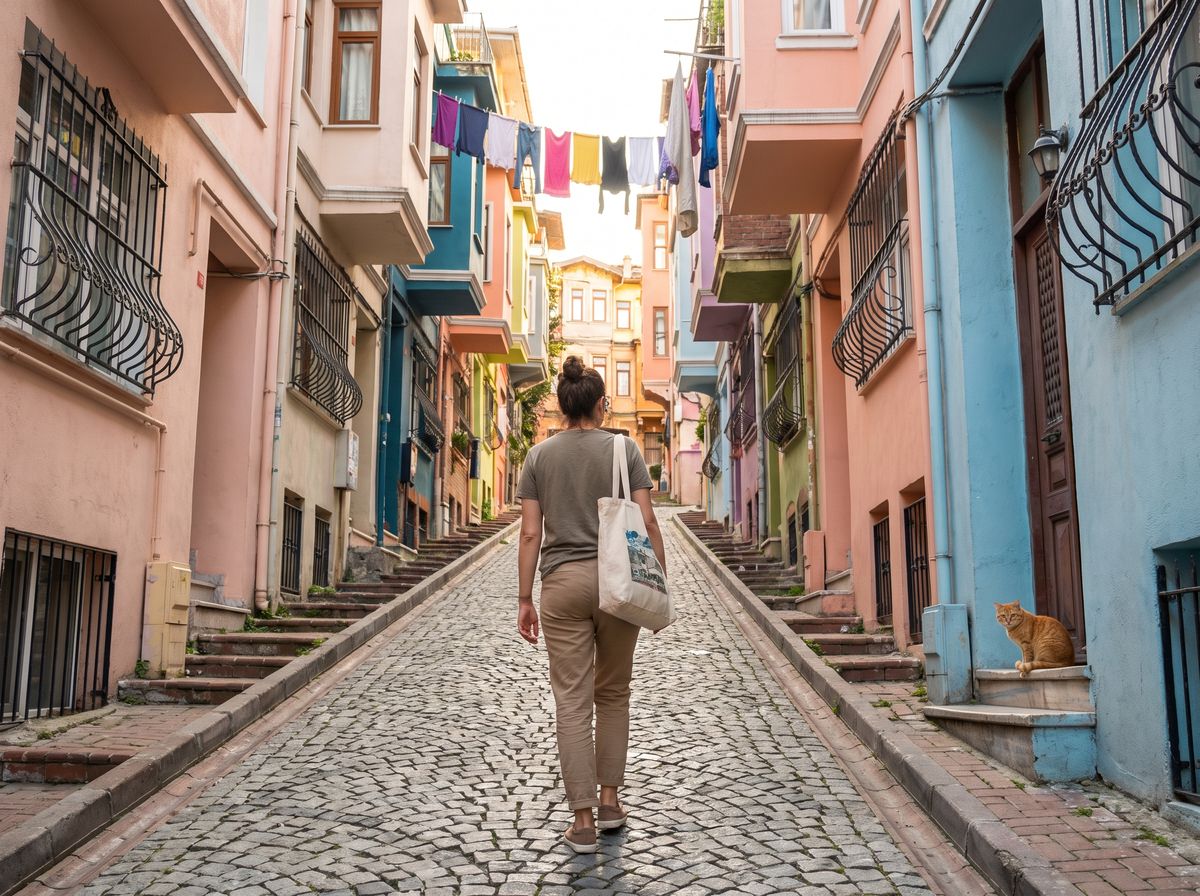
Balat, a historic Jewish quarter on the Golden Horn, feels like a village that wandered into the city: laundry lines, steep cobblestones, and candy colored 19th century row houses, most famously along Kiremit Caddesi. Come in the morning for soft light and thinner crowds, and remember that people live behind those photogenic doors.
Next door in Fener you will find the Greek Orthodox Ecumenical Patriarchate and the Bulgarian church of Sveti Stefan, a rare cast iron church assembled from prefabricated panels and consecrated in 1898.
How Do You Ride the Ferries Between Neighborhoods?
Buy an İstanbulkart (rechargeable transit card) from machines at any pier, load a few euros' worth of lira, and tap through the turnstiles. As of 2026 a single ferry crossing costs well under 1 EUR; verify current fares, since prices are set in lira and change periodically.
The classic Şehir Hatları (City Lines) crossing from Karaköy or Eminönü to Kadıköy takes 20 to 25 minutes, with boats roughly every 15 to 30 minutes through the day. Sit outside on the stern deck and buy çay (black tea) from the onboard canteen for around half a euro.
Treat the ferry as an attraction in itself: gulls trailing the boat, minarets stacking up behind you, and the cheapest Bosphorus cruise you will ever take.