
Is Türkiye Safe for Tourists in 2026?
Yes, Türkiye is safe for tourists: violent crime against visitors is rare across Istanbul, Izmir, Cappadocia, and Antalya. The real risks are financial, from rigged taxi meters to staged bar bills that can run into hundreds of euros. What a 15-day trip requires is scam awareness, not fear.
Türkiye welcomes more than 50 million foreign visitors a year as of 2026, placing it among the five most visited countries on Earth. The tourist economy is heavily policed precisely because the country depends on it.
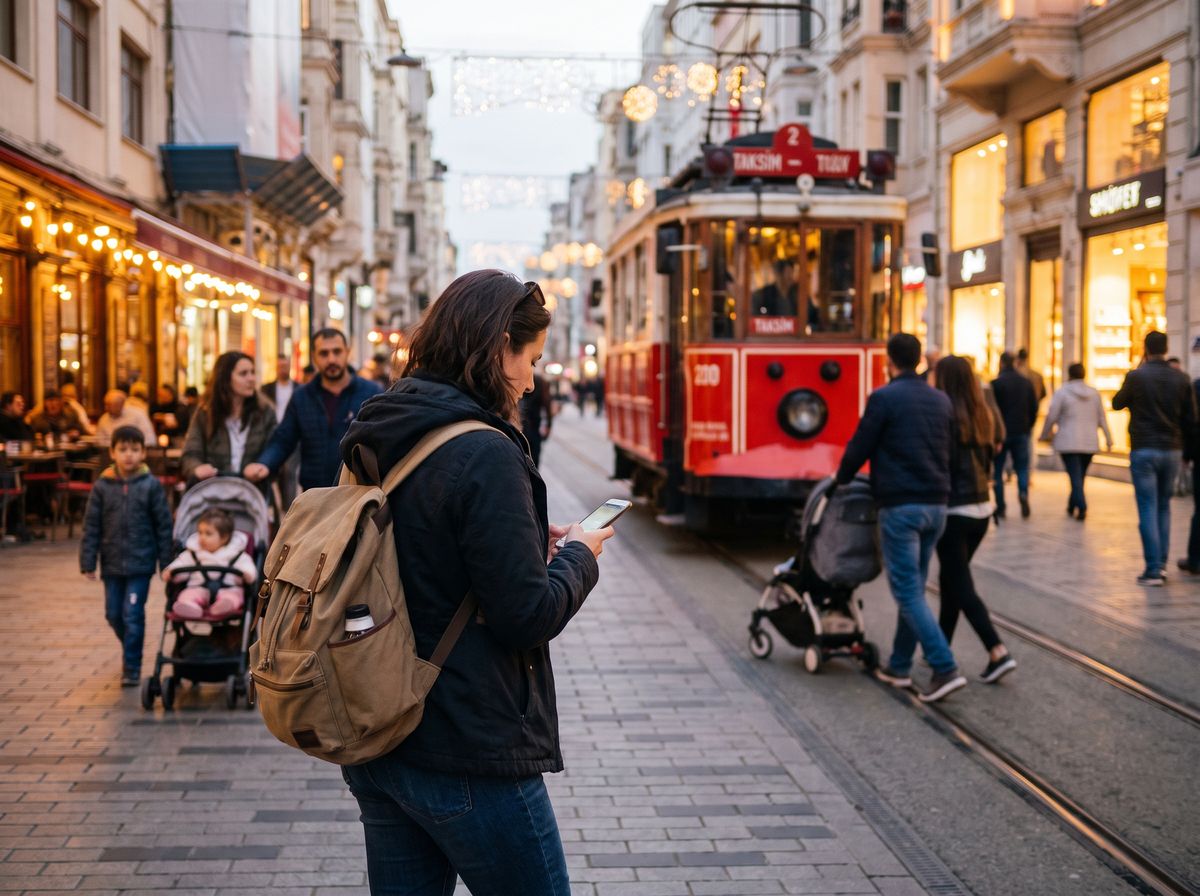
Petty theft does exist in crowds. Watch your pockets on the T1 tram, along İstiklal Caddesi (Istiklal Avenue), and inside the Kapalıçarşı (Grand Bazaar), and keep phones away from cafe table edges.
The Friend Bar Scam and Other Classics
The friend bar scam is Istanbul's most expensive trap. A friendly, fluent stranger near Taksim or Sultanahmet suggests a drink at a place he knows; the bill arrives at 300 to 1,000 EUR, backed by intimidating staff. Decline all venue invitations from brand-new acquaintances; if you choose the bar yourself, the scam cannot happen.
The shoe shiner trick is gentler theater. A shiner walking ahead of you drops his brush, you kindly return it, and the grateful free polish ends with a demand for 10 to 20 EUR. A genuine shine costs about 1 to 2 EUR, so smile, refuse, and keep walking.
Fake duty-free and government store sellers push leather, carpets, and gems at double retail with a tax-free story. Real bargains exist in Türkiye, but nothing bought under time pressure is one of them.
How Do Taxi Scams Actually Work?
The repertoire is small: a meter that is suddenly broken, a scenic detour, or the banknote swap, where you hand over 200 lira and the driver displays a 20. Photograph the taxi's license plate as you get in; drivers who see you do it almost always play fair.
Use the BiTaksi or Uber apps in Istanbul, since both log the route and fare. As of 2026 an official taxi from Istanbul Airport to Sultanahmet runs roughly 35 to 45 EUR; verify current rates, and consider the Havaist airport bus at a fraction of that price.
In Cappadocia and Antalya, transfers are usually a fixed price agreed before you get in, which removes the meter from the equation. For day-by-day transport logistics that sidestep most of these situations, see the free Getting Around section on turkey15days.com.
112: One Number, English Support
Türkiye has unified police, ambulance, fire, and coast guard emergencies under the single number 112, following the EU model. The call is free from any phone, works without a Turkish SIM, and operators can bring an English speaker onto the line.
Major tourist zones also have dedicated Turizm Polisi (tourist police) with English-speaking officers; Istanbul's best-known office sits in Sultanahmet near the tram stop. A written report from them is exactly what your travel insurer will ask for.
Save your hotel's business card with its Turkish address. In a stressful moment, handing it to a driver or an officer solves half the problem.
Should You Worry About Earthquakes?
Honestly: Türkiye sits on active fault lines, and pretending otherwise would be poor advice. The devastating 2023 earthquakes struck the southeast, several hundred kilometers from every stop on this route, and Cappadocia is among the country's lower-risk zones.
Building codes tightened sharply after the 1999 Marmara earthquake, and most tourist hotels in Istanbul, Izmir, and Antalya are modern construction. Do what locals do: note the stairwell exit when you check in and keep shoes and phone within reach at night.
If shaking starts, drop, cover, and hold on; never run for elevators. AFAD, the national disaster authority, coordinates alerts and emergency response.
Solo Travel, Honest Notes
Solo travel here is common and mostly a joy. Turkish hospitality is real: an invitation to çay (tea) from a shopkeeper is almost always exactly what it seems. The bar scam works precisely because it imitates that hospitality; the difference is that a scammer picks the venue and steers you there after dark.
Solo women report experiences comparable to southern Europe in the tourist regions: occasional persistence, rarely more. Modest dress matters only at mosques, where scarves are loaned free. After midnight, take an app-called taxi rather than walking unfamiliar streets.
Family Travel Notes
Türkiye may be the most child-friendly country you will ever visit; expect waiters to entertain your toddler and shopkeepers to offer sweets. The practical risks are traffic, not people: drivers treat crosswalks as suggestions, so hold hands and cross with locals.
Every district has a nöbetçi eczane (on-duty pharmacy) open 24 hours, with the address posted on every pharmacy door. Cappadocia balloon operators typically require children to be at least 6 years old; verify the rule with your operator before booking.