
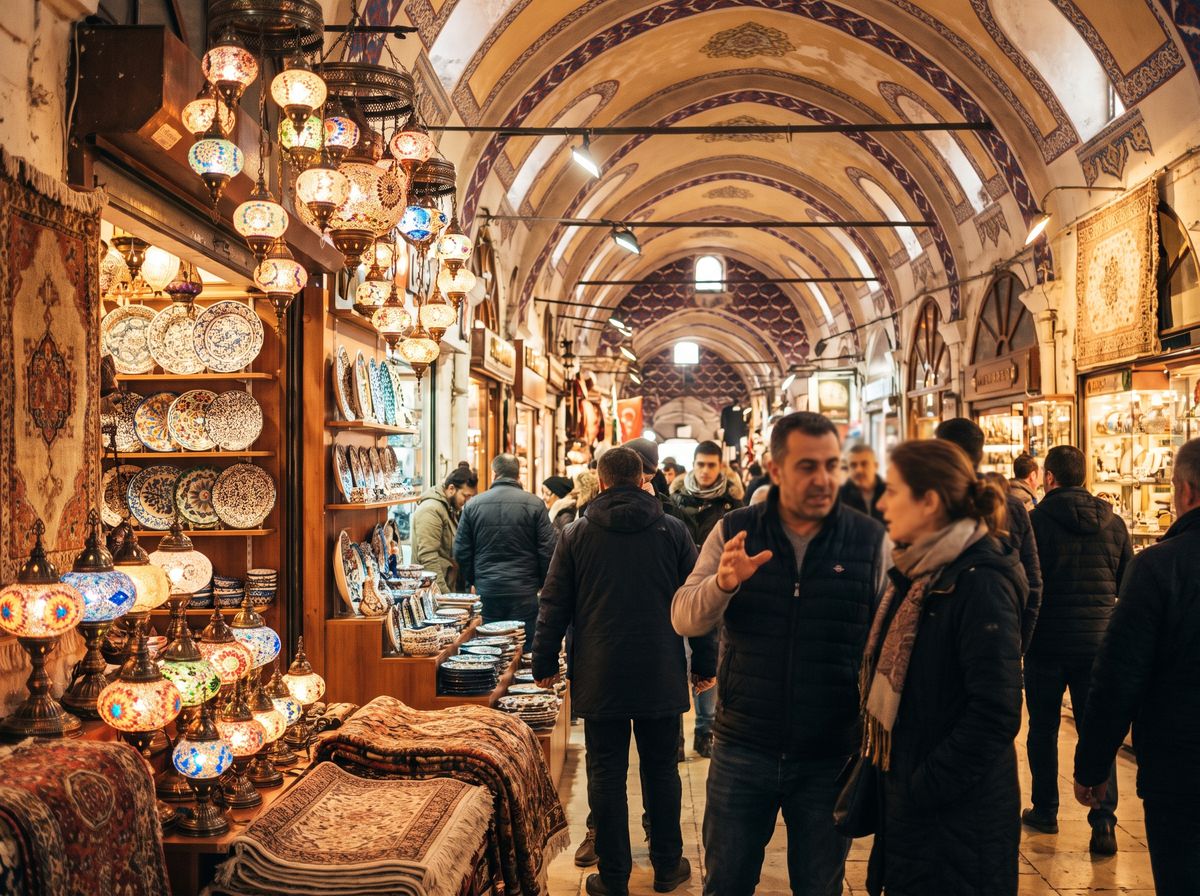
The Grand Bazaar at a Glance
Istanbul's Grand Bazaar, Kapalıçarşı (literally, Covered Market), has traded continuously since 1461 and holds roughly 4,000 shops along 61 covered streets. It opens Monday through Saturday, about 8:30 a.m. to 7:00 p.m. as of 2026, and stays closed on Sundays and religious holidays; entry is free. Plan 2 to 3 hours, arrive early via the T1 tram stop Beyazıt-Kapalıçarşı, and remember that the first price you hear is an invitation, not a verdict.
This is one of the oldest and largest covered markets on earth, spreading over roughly 30,000 square meters with 21 gates. On busy days hundreds of thousands of people funnel through, so the calm hour right after opening is precious.
How Old Is the Grand Bazaar, and Who Built It?
Sultan Mehmed II ordered the first market hall shortly after the Ottoman conquest of Constantinople in 1453, and the core building, the Cevahir Bedesten (jewel bedesten, a lockable domed hall), was completed around 1461. A second hall, the Sandal Bedesten, followed for the fabric trade. Over the next two centuries, streets of shops grew between them and were gradually roofed, creating the labyrinth you walk today.
The bazaar ran on the lonca (guild) system: every craft had its own street, its own quality rules, and its own masters and apprentices. The street names still remember them. Kalpakçılar Caddesi (Street of the Fur Cap Makers) is now the glittering main gold avenue, while Yağlıkçılar and Fesçiler recall kerchief sellers and fez makers.
What Should You Buy in the Grand Bazaar?
Mosaic glass lamps are the classic photo and the classic purchase; a small table lamp runs roughly 15 to 40 EUR as of 2026, and most shops will pack them safely for the flight home. Check the socket type before you pay, since Turkish fittings differ from North American ones.
For ceramics, learn the difference between stencil-printed souvenirs from about 5 EUR and hand-painted İznik-style quartz ware, where a single fine bowl can pass 50 EUR. Textiles are strong value: a peştemal (flat-woven hammam towel) costs around 10 to 20 EUR, and silk scarves and kilims reward slow comparison shopping.
Gold is the bazaar's oldest business and its most transparent. Jewelers sell by weight at the day's gram rate plus workmanship, so ask for the gram price first and insist on a receipt stating weight and karat.
How Do You Haggle Without Being Rude?
Haggling is expected on lamps, textiles, ceramics, and leather, and it works like a warm ritual, not combat. Counter at around half the opening price, then trade small steps toward the middle; a final figure 25 to 40 percent below the first number is a normal, friendly outcome.
Accepting a glass of çay (Turkish tea) is hospitality, not obligation, so drink it happily. The one real rule: only bargain hard on something you genuinely intend to buy, because agreeing on a price and then walking out is considered poor form.
Walking away early, though, is your strongest card. A friendly thank you and a slow move toward the door often produces a better number before you reach it, and if it does not, a near-identical item is probably two streets away. Paying cash in Turkish lira usually beats paying by card.
Hans and Hidden Courtyards Beyond the Main Streets
A han is a courtyard inn where caravans once unloaded and craftsmen worked upstairs, and dozens of them ring the bazaar's edges. Zincirli Han (Chained Han), tucked near the Mercan Gate, is the loveliest: a quiet cobbled courtyard of jewelry workshops barely a minute from the crowds.
Back inside, the Cevahir Bedesten (also called İç Bedesten, the Inner Bedesten) is the 1461 heart of the whole complex and today the best hunting ground for antiques, old silver, and curiosities. Note that the famous rooftops are officially closed to visitors, so admire the domes from below and spend your time in the courtyards instead.
Sundays, Timing, and the Spice Bazaar Walk
Go Monday through Saturday, ideally in the first hour after the roughly 8:30 a.m. opening; the bazaar is closed on Sundays and for religious holidays, and hours can shift, so verify current times before you go. Two to three hours covers the highlights without bazaar fatigue.
From the Nuruosmaniye Gate it is about a 1 kilometer, 15 minute downhill walk to the Mısır Çarşısı (Egyptian Market, better known as the Spice Bazaar), completed in 1664 beside the Yeni Cami (New Mosque) in Eminönü. Unlike the Grand Bazaar, it does open on Sundays, and it is the better stop for saffron, lokum (Turkish delight), and dried fruit.
For where this shopping morning fits into a full Istanbul day, see the free Istanbul itinerary section on turkey15days.com.